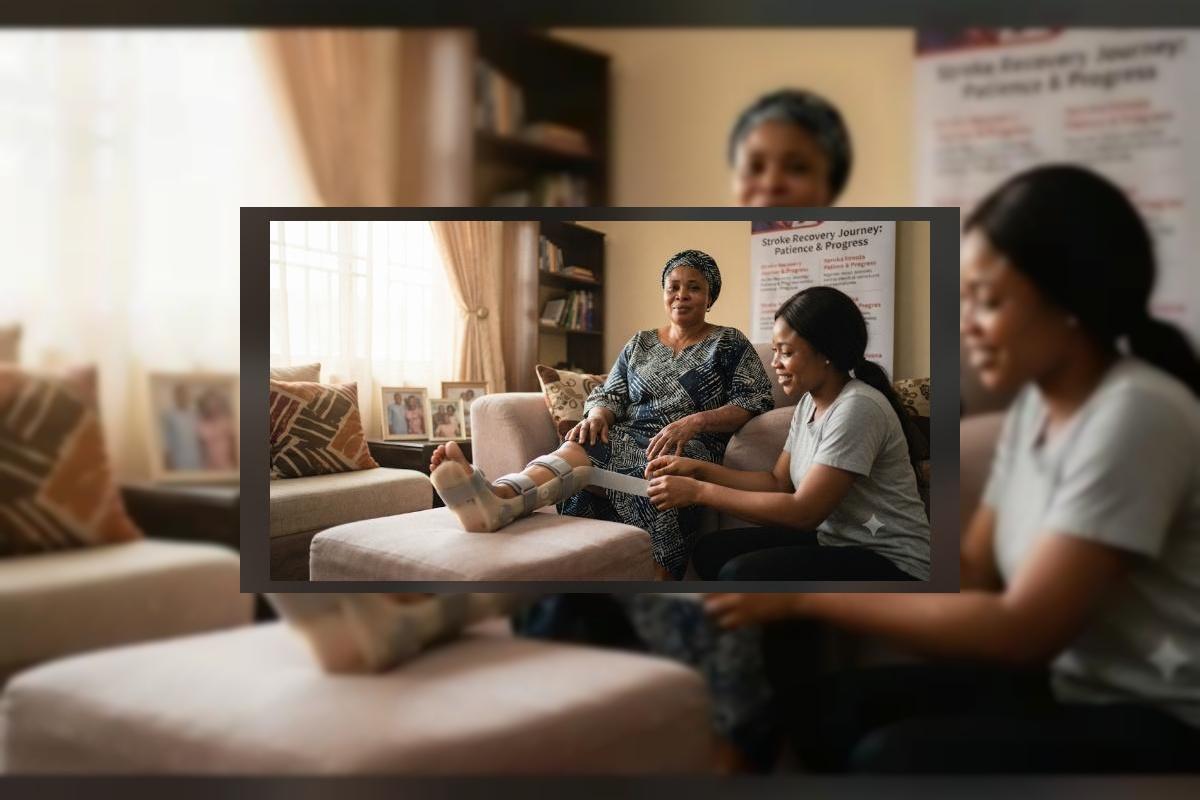

The silence surrounding nighttime recovery in stroke rehabilitation is a massive, missed opportunity in Nigerian healthcare. For a stroke survivor dealing with hemiplegia, the hours spent sleeping are often when muscle tightness (spasticity) quietly sets in, pulling joints into rigid, permanent positions that make movement increasingly difficult during the day.
"Assuming that rehabilitation only happens during daytime therapy sessions is a clinical error that ignores the biological reality of spasticity. True stroke advocacy demands that we use custom-molded night splints to hold the limbs in a neutral, relaxed position while the patient sleeps, preventing the 'locking' of joints that often occurs overnight.
In the landscape of post-stroke recovery in Nigeria, we often focus on active exercises while neglecting the passive hours of the night. When a stroke survivor suffers from hemiplegia, the muscles on one side of the body lose their neurological regulation. Without this control, muscles can become chronically shortened and "tight." Overnight, without activity to stretch them out, these muscles can tighten so significantly that the patient wakes up with a "contracture"—a fixed deformity where the ankle or wrist cannot be moved back to a functional position. Custom night-splinting is a non-invasive, structural intervention designed to provide a low-load, prolonged stretch that keeps the muscles at a healthy resting length, ensuring the survivor doesn't lose the progress they worked so hard to gain during the day.
The Three Barrier Cards: Why Nighttime Neglect Stalls Stroke Recovery
To professionalize stroke rehabilitation across the country, we must dismantle the three pillars of negligence that cause long-term joint rigidity.
| Barrier | The Impact on the Patient | The Necessary Shift |
|---|---|---|
| The Day-Only Focus | Rehab is viewed as a daytime gym activity, leaving the body unprotected for 8+ hours of sleep. | Educating families on the importance of 24-hour positioning to prevent spasticity accumulation. |
| The Contracture Myth | Families accept rigid joints as an inevitable part of the "stroke condition" rather than a preventable mechanical outcome. | Providing custom night-splints early in the recovery phase to keep joints supple and mobile. |
| Lack of Customization | Use of generic, ill-fitting supports causes skin irritation, leading patients to discard the splint entirely. | Ensuring all night-splints are custom-molded to the patient’s specific limb geometry for maximum comfort. |
"A night splint is not a cage; it is a gentle guide. By holding the joint at the optimal angle overnight, we prevent the 'morning stiffness' that forces the patient to start their daily therapy from a position of disadvantage."
Clinical Profile: The Biomechanics of Low-Load Stretching
Muscle spasticity after a stroke is highly reactive. If you pull a spastic muscle quickly, it snaps back with even more force. However, if you apply a low-load, prolonged stretch, the muscle tissue can gradually adapt and lengthen over time. A certified orthotist creates custom night-splints—commonly for the ankle (to prevent foot drop) or the wrist—that hold the muscle in this gentle, elongated state for the duration of the sleep cycle. This process, known as "creep," allows the dense connective tissues around the joint to slowly relax, effectively preventing the formation of permanent contractures and ensuring the patient wakes up with a limb that is ready for functional movement.
What Changes Everything: The Action Strip
By prioritizing consistent nighttime positioning, we achieve five essential clinical outcomes:
1 Prevention of Permanent Deformities
Proactive stretching keeps muscles at a healthy length, preventing the permanent shortening that often leads to surgery.
2 Reduced Morning Stiffness
Patients start the day with more range of motion, making it significantly easier to perform daily hygiene and therapy exercises.
3 Optimization of Daytime Therapy
When the joints are not fighting overnight rigidity, the energy spent in physical therapy is dedicated to functional improvement, not just stretching.
4 Decreased Long-Term Pain
Preventing contractures stops the associated shoulder and hip strain that occurs when the body tries to compensate for a stiff limb.
5 Improved Quality of Life
Maintaining flexibility keeps the patient more engaged, more independent, and significantly reduces the physical demand on their caregivers.
A Call to Action
To stroke survivors and caregivers: Do not let muscle tightness win while you sleep. Ask your healthcare provider about custom night-splinting today—it is one of the most effective ways to protect your mobility. To our therapy teams: Incorporate 24-hour positioning into your rehab plans; mechanical support is the perfect partner to physical therapy. To our policy makers: Increase access to custom orthotic fabrication services as a core component of stroke recovery programs. Your potential for recovery doesn't stop when you go to bed; your joints deserve to be supported 24/7.
Comments (0)
No comments yet. Be the first!
Please login to leave a comment
Login to Comment