
When the rains stop across West Africa, the survival of smallholder farms becomes a race against time. For generations, small-scale farmers have been at the mercy of unpredictable weather cycles, watching their yields plummet the moment the dry season sets in. To keep crops alive, many have had to choose between two extremes: the backbreaking toll of carrying manual watering cans over acres of land, or investing in expensive, fuel-gulping imported motorized pumps. While motorized options offer speed, the volatile cost of petrol, lack of accessible repair technicians, and the absence of matching spare parts often leave these expensive machines rusting away in equipment sheds after their first minor breakdown.
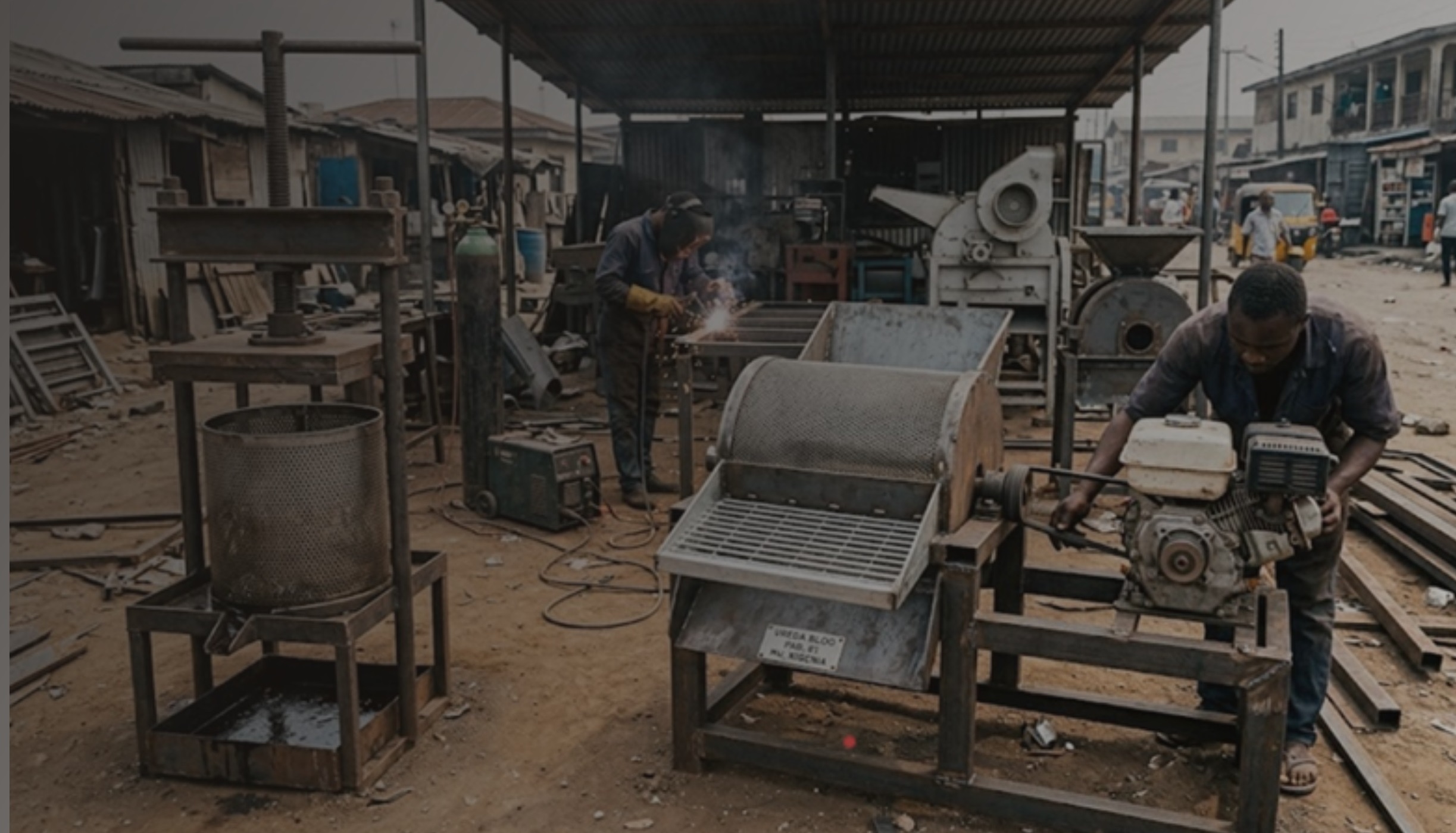
The true breakthrough in rural water management isn't coming from high-tech imported drip networks or multimillion-dollar irrigation schemes funded from abroad. Instead, it is being forged right along the roadside by ingenious teams of local welders, blacksmiths, and scrap-metal engineers. These backyard fabricators are taking a hard look at the structural failures of factory-imported manual pumps—such as basic treadle and hand-operated piston designs—and completely re-engineering them into highly durable, ultra-efficient mechanical workhorses built specifically for our local terrain.
At **Vreda Blog**, our core mission is centered on telling these powerful, local mechanical stories and spotlighting the brilliant tech-driven initiatives changing our communities from the inside out. This week, we are diving deep into the fluid dynamics, material upcycling, and clever fabrication tricks used by neighborhood artisans to re-engineer manual irrigation hardware into accessible, affordable lifelines for local agriculture.

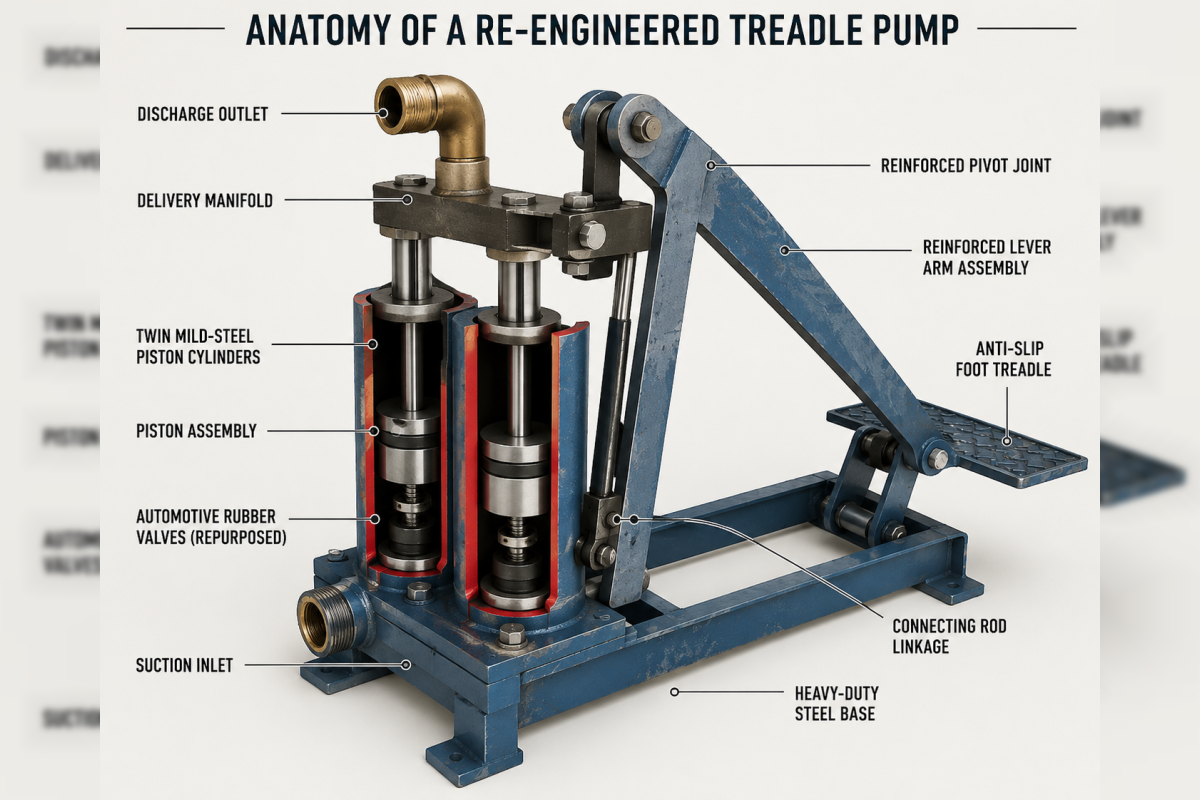
Anatomy of a Re-Engineered Treadle Pump: Highlighting the twin mild-steel piston cylinders, repurposed automotive rubber valves, and the reinforced lever arm assembly.
1. Material Upcycling: Turning Scrap into Fluid Power
The primary flaw of standard factory-imported manual pumps is their reliance on thin-gauge plastics, lightweight aluminum casting, and proprietary synthetic rubber seals. While these materials perform well under clean, controlled test environments, they degrade rapidly under the harsh tropical sun and the reality of local farming conditions. When a pump draws water from an open riverbed, a muddy stream, or a shallow hand-dug well, it doesn't just pull water—it sucks up fine sand, silt, organic debris, and small pebbles. Within weeks, this abrasive material scores the soft plastic cylinders and tears the delicate internal seals, causing the pump to lose its prime and become entirely useless.
Roadside artisans fix this vulnerability by replacing fragile materials with rugged, upcycled industrial metal alloys and heavy-duty automotive scrap. Instead of custom-molded plastic cylinders that crack under physical strain, local welders source discarded structural steel piping or decommissioned vehicle exhaust tubes. They precision-hone the internal bore of these pipes using handheld grinding tools until the inner surface is mirror-smooth, creating an unyielding, heavy-walled piston chamber that can withstand decades of abrasive wear.
The internal suction valves and piston cups—historically the weakest link in irrigation design—are completely re-engineered using thick, vulcanized rubber cut from old truck and tractor tires. These homemade rubber valves are backed by heavy steel washers forged by local blacksmiths. This simple material substitution creates an incredibly tight, resilient, high-pressure vacuum seal. When sand enters the chamber, the thick vulcanized rubber flexes around the grains rather than tearing, maintaining a perfect airtight vacuum capable of pulling water from deeper water tables without wearing down the mechanism.
2. Maximizing Human Leverage: The Treadle Revolution
Operating a standard hand-operated lever pump for hours under the afternoon sun is grueling, exhausting work. It puts tremendous strain on the operator's lower back, shoulders, and arms, limiting the amount of land a single family can effectively irrigate. To resolve this physiological bottleneck, local fabricators have shifted the mechanical design from hand power to leg power by perfecting the **twin-cylinder treadle pump**. This shift leverages the strongest muscles in the human body—the quadriceps and glutes—transforming irrigation into a highly efficient, low-fatigue exercise.
- The Dual-Cylinder Action: By linking two separate welded steel cylinders to a central rocking lever arm, the pump establishes a continuous, alternating intake and discharge cycle. As the farmer steps down on one side, it pushes a piston downward to force water out into the discharge pipe, while simultaneously lifting the opposite piston to draw a fresh supply of water into the adjacent cylinder. This dual-action eliminates the "dead time" found in single-cylinder pumps, creating a smooth, continuous stream of high-volume water.
- Ergonomic Step Levers: Long wooden or metal treadles are attached to the piston rods, allowing the farmer to stand on top of the machine and use a natural, rhythmic walking or stepping motion to drive the pistons. By utilizing their entire body weight rather than raw muscle power, operators can pump water for hours at a time without experiencing debilitating physical fatigue, enabling single smallholder plots to scale up their dry-season vegetable production dramatically.
- Reinforced Frame Anchors: Unlike imported light-frame models that wobble and sink into soft earth, roadside welders build wide, stable base supports using heavy-duty angle iron and U-channel steel. These rugged bases ensure the pump remains firmly anchored in soft, muddy riverbanks, marshy swamps, or loose sandy soil without tipping over or distorting the alignment of the internal stroke mechanisms during heavy operation.
Irrigation Sourcing: Comparing Local and Imported Engineering
To understand why local fabrication is rapidly capturing the market for smallholder irrigation across regional farming hubs, let's look at how these re-engineered designs stack up against alternative irrigation systems:
| Irrigation Method | Operational Cost & Dependability | Maintenance & Field Resilience |
|---|---|---|
| Imported Petrol Pumps | High operational costs. Requires continuous cash flow for fuel purchases and expensive specialized engine oil, eating directly into seasonal farm profits. | Fragile. Highly prone to carburetor and fuel-line clogging from dust; requires specialized mechanics and hard-to-find foreign replacement components. |
| Standard Hand Pumps | Zero fuel costs, but highly exhausting. Delivers a low, intermittent water volume per stroke and causes rapid upper-body fatigue within short working windows. | Moderate. Internal plastic or leather valves tear frequently when exposed to sand grains, forcing frequent down-time and seal replacements. |
| Re-Engineered Treadle Pump | Zero fuel costs. Uses efficient leg-driven leverage to pump up to 3,000 liters of water per hour with minimal effort, making dry-season farming completely self-sustaining. | Ultra-Rugged. Built with heavy steel pipes and durable truck-tire rubber valves. Designed so that it can be fully taken apart and repaired on-site using basic household tools. |
3. Sustainable Economics: Keeping the Farm Flowing
Beyond the mechanical advantages of using heavy steel over fragile plastic, the true brilliance of these locally re-engineered manual irrigation pumps lies in their sustainable unit economics. Imported technologies create a dangerous dependency loop. If an expensive motorized pump encounters a cracked engine block or a stripped internal gear mid-season, a farmer might lose their entire vegetable crop while waiting for specialized parts to arrive from a distant city or overseas distributor. The farm's survival becomes tied to global supply chains.
In stark contrast, locally fabricated treadle pumps completely eliminate this operational downtime. Because they are designed out of standardized, open-source materials available in any local community, they fit perfectly into a self-contained repair ecosystem. If a valve eventually wears down after months of heavy use, the farmer does not need to look for an authorized brand dealership. They can simply take an old knife, cut out a new circular rubber washer from a scrap motorcycle tire, unscrew the piston head, and swap the part out right on the edge of the field within twenty minutes.
If a structural steel weld cracks under the intense physical pressure of peak dry-season usage, the machine doesn't have to be thrown away. The farmer can easily carry the compact metal frame to the nearest roadside welding shop. Any local technician with a basic arc-welding machine can grind down the joint, lay down a fresh bead of reinforcing steel, and have the pump back in full working order before sundown for a fraction of the cost of a new machine. This circular economy keeps money right inside the community, ensuring that the capital spent on agricultural infrastructure continuously circulates among local craftspeople rather than leaking out to foreign manufacturers.
The Vreda Sourcing Tip: When commissioning a custom treadle pump from a local fabrication yard, always ask the welder to install an integrated inline mesh filter box on the suction inlet pipe. This simple, inexpensive addition blocks large pebbles and river debris from ever entering the main cylinders, protecting your internal tire-rubber valves and extending the operational lifespan of your pump by several seasons.
4. Powering Grassroots Abundance
The impact of this roadside engineering revolution goes far beyond the walls of individual welding shops; it is actively rewriting the realities of local food security. By bringing down the upfront and operational costs of irrigation, these re-engineered pumps enable smallholder farmers to cultivate high-value crops like tomatoes, peppers, leafy greens, and onions all year round, rather than farming only during the rainy season. This steady, year-round production stabilizes food prices in local markets and provides rural families with a reliable, predictable source of income during the challenging dry months.
Furthermore, this movement demonstrates that industrial modernization does not always require importing massive automated systems from abroad. True, lasting economic transformation happens when local artisans are empowered to apply practical creativity to the specific challenges within their immediate environment. By altering the leverage points, reinforcing structural vulnerabilities, and utilizing readily available materials, these roadside mechanics have successfully turned a basic mechanical concept into a vital engine for regional agricultural trade.
The ingenuity thriving inside our neighborhood welding and fabrication yards proves that great solutions are born from practical necessity and local skill.
Are you currently using a modified irrigation setup on your land, or have you noticed an interesting mechanical design in your local fabrication hub? Let's talk about the incredible roadside engineering happening in your area in the comments below!
Comments (0)
No comments yet. Be the first!
Please login to leave a comment
Login to Comment