
Engineering Efficiency: How Local Welders Built the Modern Palm Oil Press
From grueling manual labor to mechanical triumph—how indigenous fabrication workshops revolutionized West Africa’s agricultural backbone.
For generations, the extraction of palm oil across West Africa was a test of raw human endurance. Traditional processing required communities to tread cooked palm fruits inside hollowed-out logs or concrete pits for hours, using sheer physical force to separate the oil from the fibrous pulp. It was a slow, exhausting, and highly inefficient system that left up to half of the available oil trapped inside the waste material.
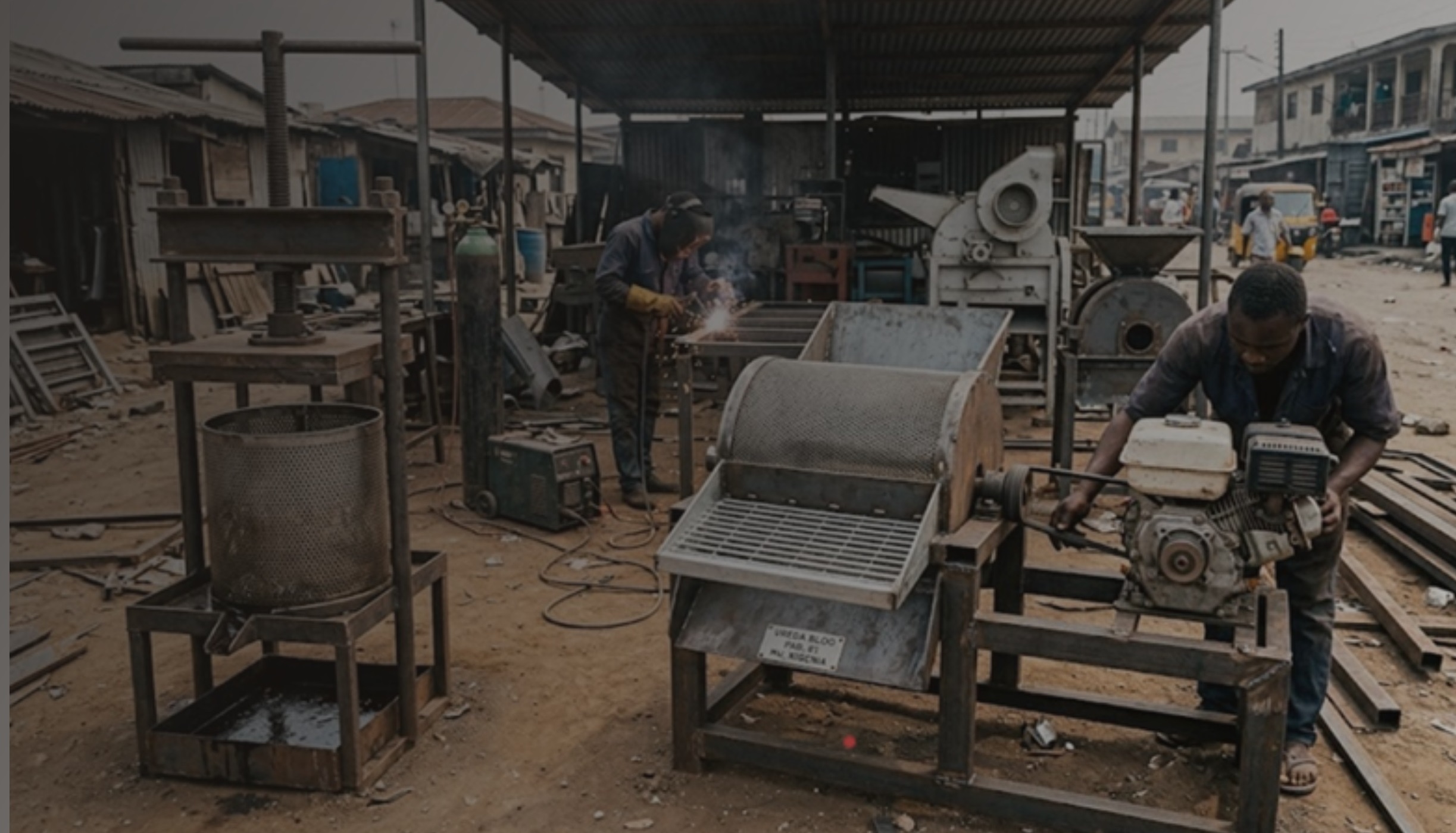
While major multinational corporations rely on multimillion-dollar imported industrial milling plants, these massive machines are completely out of financial reach for the smallholder farmers who drive the vast majority of local palm cultivation. The true revolution in agricultural efficiency didn't come from imported western technology. It was engineered right inside localized, open-air fabrication workshops by ingenious teams of local welders, mechanics, and scrap-metal designers.
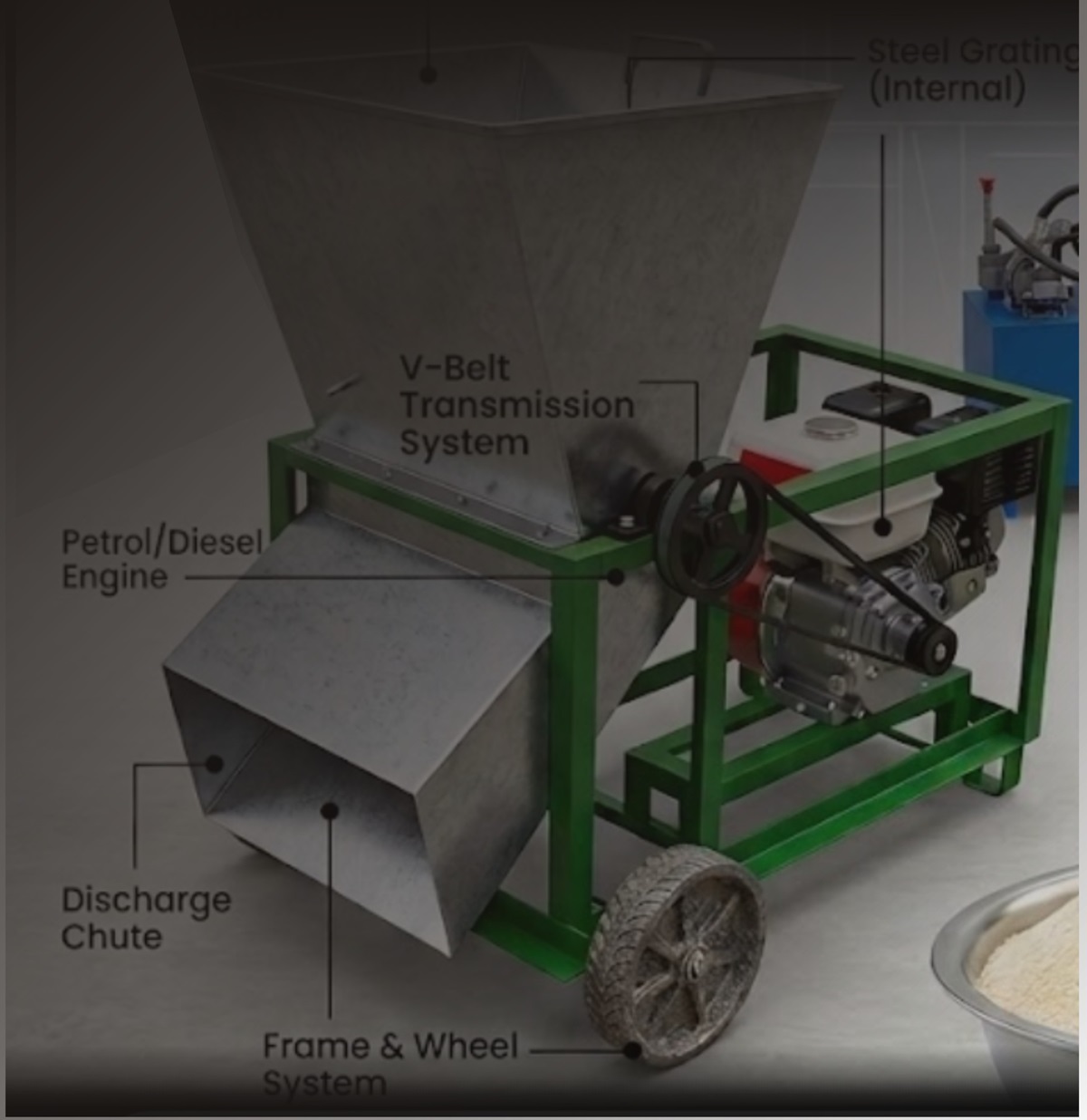
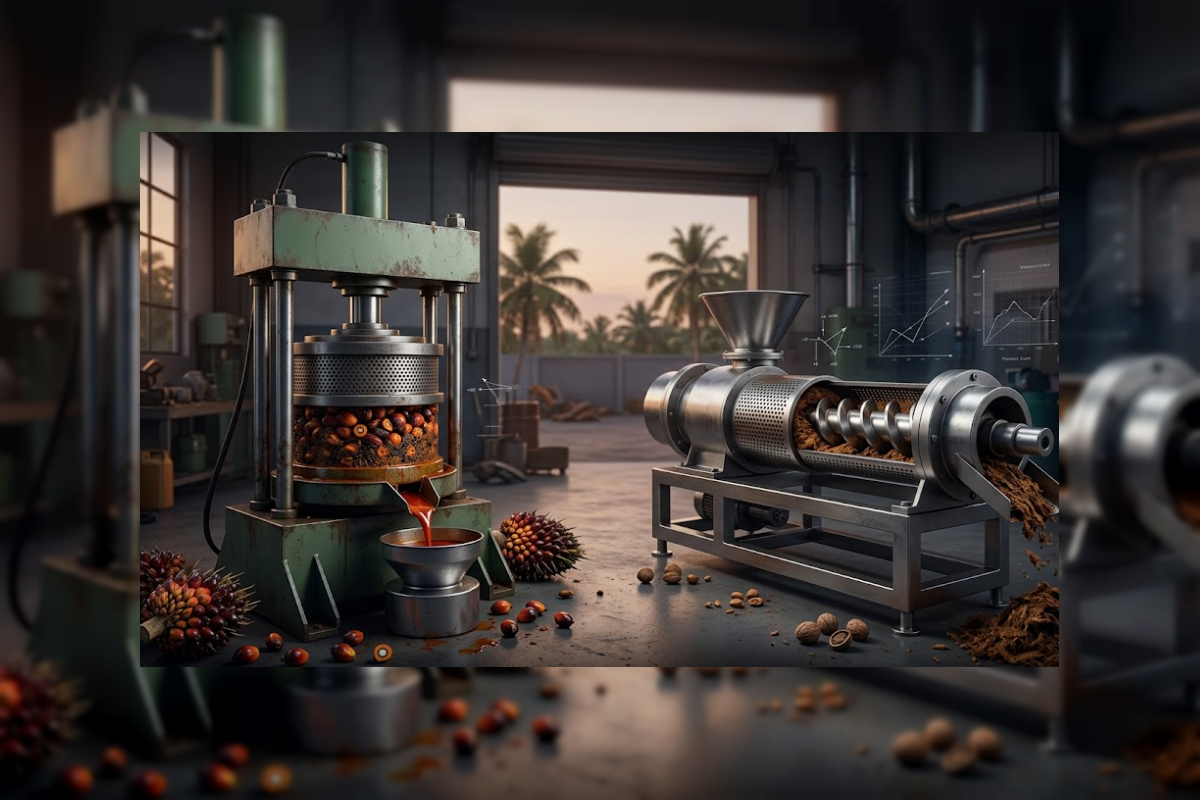
By masterfully bridging the gap between mechanical engineering principles and available community resources, these local fabricators developed the modern, mechanized **screw and hydraulic palm oil presses**. This deep dive explores the physics of local fabrication, structural designs, and the brilliant ways welding workshops transformed a grueling ancestral chore into a streamlined, high-yield mechanized business.

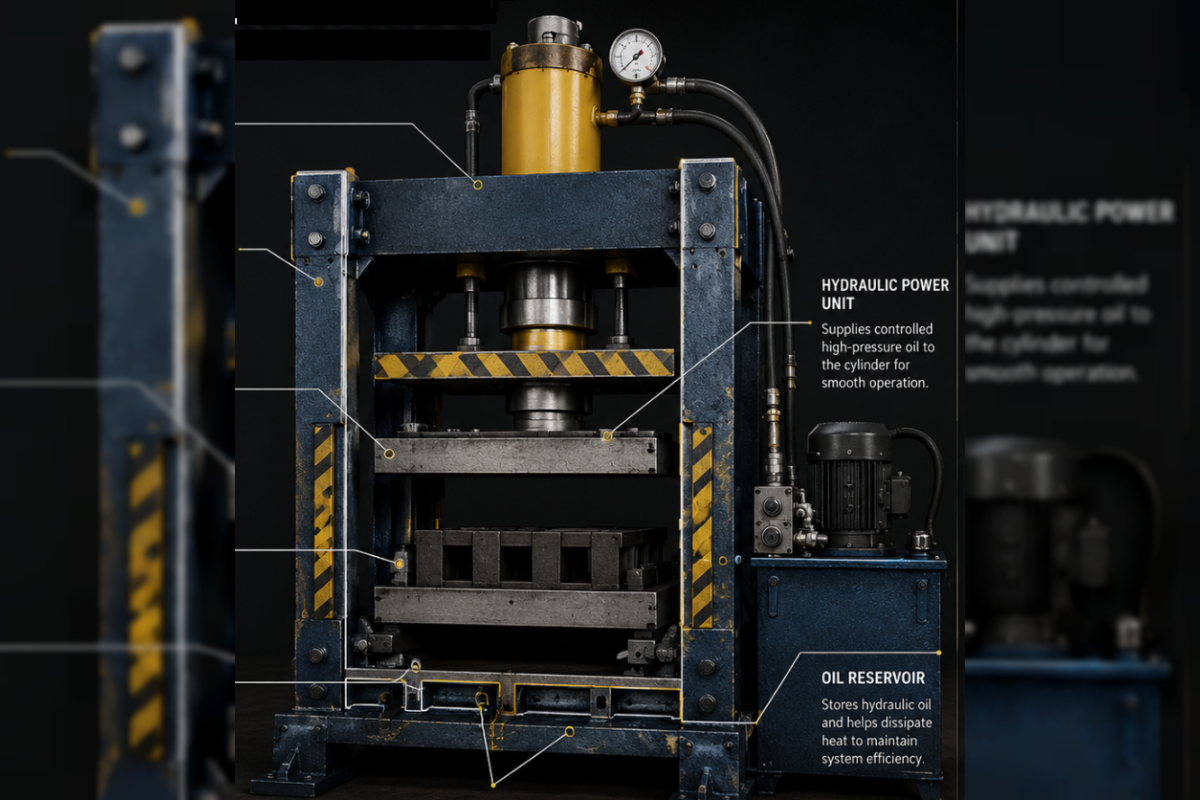
Anatomy of a Local Hydraulic Press: A technical cross-section highlighting the reinforced channel-iron frame, heavy-duty pressure plates, and oil drainage channels.
1. Structural Rigidity: Mastering the Physics of High-Pressure Welding
Extracting every drop of oil from dense palm fruit mash requires immense, concentrated pressure. If you build a press frame out of weak material or use subpar joining techniques, the machine will literally tear itself apart under the load. Local welders mastered this challenge by sourcing and repurposing heavy-gauge, structural **U-channel steel** and **I-beams** from decommissioned industrial structures and scrap yards.
To handle the intense structural load, fabricators rely on multi-pass arc welding techniques, laying down thick, deep-penetrating beads using high-tensile electrodes. The frame must be perfectly square and reinforced with triangular gusset plates at critical stress points. By ensuring absolute structural rigidity, the welder guarantees that all the mechanical force from the manual screw or hydraulic jack is directed downward into the fruit mash, rather than flexing and weakening the machine's steel frame over time.
2. Fusing Fire and Fabricated Steel: The Core Components
A modern oil press is an elegant assembly of simple, powerful mechanical components working in unison:
- The Perforated Extraction Cage: Welders roll thick mild-steel sheets into heavy-duty cylinders, drilling hundreds of precision-spaced drainage holes. This cage holds the cooked fruit while allowing the expelled oil to escape.
- The Heavy-Duty Pressure Plate: A thick, circular steel plate cut precisely to fit inside the cage with minimal clearance, preventing the fruit pulp from squeezing upward past the margins during pressing.
- The Forged Core Elements: While welders are masters of cutting, structuring, and joining steel, they rely on specialized partnerships for components that must withstand extreme friction. For these critical structural points, welders turn directly to traditional blacksmiths who forge the ultra-dense iron parts, heavy-threaded screw shafts, and high-impact levers needed to drive the manual pressing mechanism.
Evolution of Processing: Sizing Up Local Press Technology
To see just how much local welding innovations have changed the game, let's look at the mechanical differences between traditional, manual, and hydraulic extraction methods:
| Extraction System | Core Mechanical Drive | Processing Efficiency & Oil Yield |
|---|---|---|
| Traditional Foot-Treading | Pure human physical force (treading down fruit mash in pits). | Low Efficiency (45% - 50% yield). Takes hours of grueling labor and leaves immense amounts of oil behind in the waste. |
| Welded Manual Screw Press | Forged iron screw shaft paired with a cross-bar handle lever. | Medium-High Efficiency (70% - 75% yield). Uses mechanical advantage to multiply human force, cutting processing times in half. |
| Welded Hydraulic Jack Press | Integrated 30-to-50 ton fluid-driven hydraulic bottle jack. | Maximum Efficiency (85% - 92% yield). Fluid power squeezes the mash completely dry with minimal human physical effort required. |
3. Simple Sourcing, Shared Wealth: The Power of Local Fabrication
The true brilliance of locally fabricated palm oil presses lies in their simple, highly sustainable unit economics. Because these machines are built entirely out of locally sourced, standardized steel channels and common automotive hydraulic components, they are incredibly easy and affordable to maintain.
If an imported industrial mill breaks down in a rural community, the entire processing operation grinds to a halt for weeks while farmers wait for expensive foreign replacement parts and highly specialized engineers. But if a locally fabricated press structural weld cracks or a hydraulic jack fails under heavy seasonal use, the local village welder can ground, reweld, or replace the standard parts within a single afternoon. This self-contained repair ecosystem keeps processing costs low and ensures the capital spent on equipment maintenance stays right within the community.
Fabricator Tip: When commissioning an oil press from a local welding shop, always request a dual-stage collector basepan made of food-grade stainless steel. This prevents rust contamination, making your final palm oil product much cleaner and ready for high-value retail markets.
The humble palm oil press is a perfect example of what happens when local craftsmanship takes on major agricultural challenges. It proves you don't need fancy foreign factories to build highly efficient industrial tools.
Are you running a mechanized processing mill, or do you have an innovative fabrication workshop in your neighborhood? Let’s talk about the incredible local engineering happening in your area in the comments below!
Comments (0)
No comments yet. Be the first!
Please login to leave a comment
Login to Comment